
White Paper

VMware Alternatives: What Australian Organisations Need to Consider in 2026

Recent VMware licensing and commercial changes have prompted many Australian organisations to reassess their virtualisation strategy. This white paper compares Nutanix AHV, Microsoft Hyper-V and Proxmox VE while examining infrastructure architecture, operational considerations and migration factors that influence platform selection.

What Are The Best Alternatives To VMware?

The most commonly evaluated VMware alternatives are Nutanix AHV, Microsoft Hyper-V and Proxmox VE. Each platform offers different advantages depending on infrastructure requirements, operational preferences, licensing considerations and future growth objectives. This white paper provides a practical comparison to help organisations understand which option may be the best fit.

Executive Summary

VMware licensing changes have prompted many organisations to reassess their virtualisation strategy. This white paper compares Nutanix AHV, Microsoft Hyper-V and Proxmox VE while exploring infrastructure architecture, operational considerations and platform selection criteria.

It is designed to help IT leaders make informed decisions based on workloads, business requirements, licensing impact and long-term infrastructure direction.

Download the White Paper

Key Takeaways

VMware is no longer the only enterprise choice.

Nutanix AHV offers mature HCI capabilities.

Hyper-V remains attractive for Microsoft environments.

Architecture matters as much as platform choice.

Proxmox VE offers flexibility and lower commercial overheads.

Platform Comparison Overview

Every virtualisation platform approaches infrastructure differently. While Microsoft Hyper-V, Nutanix AHV and Proxmox VE all deliver enterprise virtualisation capabilities, their strengths vary across management, scalability, licensing and infrastructure design.

Enterprise-grade hyperconverged infrastructure platform designed for simplicity, scalability and operational efficiency.

Integrated compute and storage

Enterprise HCI architecture

Advanced automation capabilities

Strong scalability for growth

A familiar virtualisation platform for Microsoft-centric organisations aligned with Windows Server and Azure ecosystems.

Windows Server integration

Azure Local support

Familiar management tools

Cost-effective for Microsoft environments

An open-source virtualisation platform offering flexibility, control and lower licensing overheads.

Open-source platform

KVM-based virtualisation

Container and VM support

Flexible licensing model

What You'll Find Inside

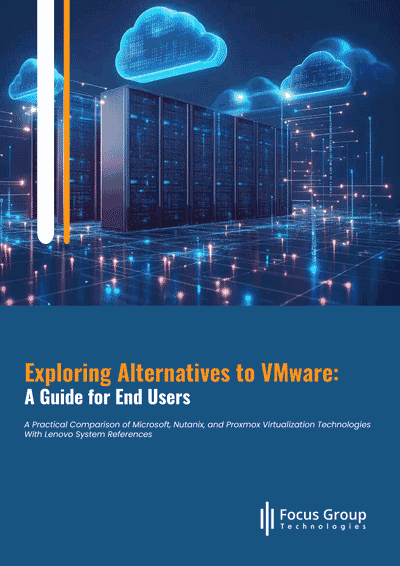
This white paper provides practical guidance for organisations evaluating alternatives to VMware. It combines platform comparisons, architecture considerations and migration planning insights to support informed infrastructure decisions.
Platform comparison guidance

Infrastructure architecture considerations

Migration planning insights

Licensing and commercial factors

Evaluation framework for decision making

Download The Full White Paper

Access the complete platform evaluation including architecture guidance, licensing considerations, migration planning and recommendations.

Download the White Paper

FREQUENTLY ASKED QUESTIONS

Common Questions About VMware Alternatives

What are the most common alternatives to VMware?

The most common VMware alternatives being evaluated by Australian organisations are Nutanix AHV, Microsoft Hyper-V and Proxmox VE. Each platform offers different advantages depending on infrastructure requirements, existing skills, operational models and long-term business objectives.

Many organisations are reassessing VMware following licensing, subscription and commercial changes. The goal is not simply to replace VMware, but to evaluate whether alternative platforms may offer better alignment with operational requirements, infrastructure strategy and future investment plans.

Nutanix AHV is one of the leading VMware alternatives. It provides enterprise virtualisation capabilities integrated with Nutanix hyperconverged infrastructure, helping organisations simplify management, scalability and day-to-day operations.

Yes. Hyper-V remains a strong option for organisations invested in Microsoft technologies. Integration with Windows Server, Active Directory and Azure makes it particularly attractive for businesses pursuing a hybrid cloud strategy.

Proxmox VE is an open-source virtualisation platform that combines KVM virtual machines, container support and software-defined infrastructure capabilities. It is often evaluated by organisations seeking greater flexibility and reduced licensing costs.

The right platform depends on workload requirements, infrastructure architecture, operational capabilities, cloud strategy and budget. A structured assessment helps ensure platform selection aligns with both technical and business objectives.

Organisations should evaluate workload dependencies, infrastructure architecture, operational processes, data protection requirements, licensing implications and migration complexity before committing to a new virtualisation platform.

Migration timelines vary depending on the size and complexity of the environment. Small environments may be migrated in weeks, while larger enterprise platforms often require several months of planning, testing and staged implementation.

In most cases, yes. Modern migration tools and platform capabilities support workload migration from VMware to alternative platforms. The approach will depend on application requirements, operating systems and infrastructure design.

Not necessarily. Platform decisions should be based on business requirements, operational goals and long-term strategy rather than reacting to vendor changes alone. A structured assessment is often the best first step.

Focus Group Technologies helps organisations evaluate VMware alternatives through infrastructure assessments, architecture reviews, migration planning and platform comparison workshops. Our goal is to help businesses make informed decisions based on real operational requirements.

Many organisations are reassessing their virtualisation strategy due to changes in licensing models, product packaging, support structures and long-term infrastructure planning requirements. While VMware remains a powerful enterprise platform, some businesses are evaluating alternative solutions that better align with their operational, technical and budget objectives. VMware’s licensing and product changes continue to influence infrastructure planning decisions globally. Organisations can review official information directly from Broadcom (link to https://www.broadcom.com).

NEXT STEP

Need Help Evaluating VMware Alternatives?

Choosing a virtualisation platform is about more than replacing VMware. Infrastructure architecture, workload requirements, operational capabilities and long-term business objectives all influence the right decision. Focus Group Technologies helps organisations assess VMware alternatives, compare platform options and develop practical migration strategies that align with real-world business and infrastructure requirements.